How I Found My Balance in Just 7 Days — And Why It Changed Everything
You don’t need hours at the gym to feel centered. I was overwhelmed, distracted, and constantly off-kilter—until I started real balance training. It’s not just about standing on one leg; it’s about aligning your body and mind. In just one week, I noticed sharper focus, less stress, and a deeper sense of calm. This is how simple movements rewired my mental resilience—and how they can do the same for you.
The Hidden Link Between Physical and Mental Balance
Balancing on one foot might seem like a minor physical task, but its effects ripple far beyond the body. Research shows that physical stability is deeply tied to mental clarity and emotional control. When the body learns to stay steady, the brain follows. This connection stems from how our nervous system processes movement, posture, and spatial awareness. The vestibular system, located in the inner ear, plays a central role. It detects head motion and orientation, sending signals to the brain that help maintain equilibrium. But its influence doesn’t stop at coordination—it also impacts mood regulation, attention, and even stress response.
Modern life, however, works against this natural balance. Hours spent sitting, staring at screens, and multitasking overload the brain while weakening the body’s stabilizing systems. The result? A subtle but growing sense of disconnection—feeling mentally scattered, emotionally reactive, or physically ungrounded. Without regular movement challenges, the brain's ability to integrate sensory input declines. Over time, this can contribute to increased anxiety, reduced focus, and a feeling of being perpetually off-balance. The good news is that even small, intentional balance exercises can begin reversing these effects quickly.
Studies have demonstrated that engaging in balance-focused activities activates areas of the brain linked to attention and emotional regulation. For example, the prefrontal cortex—responsible for decision-making and self-control—shows increased activity during balance tasks. Similarly, the cerebellum, long thought to manage only motor control, is now understood to influence cognitive functions like working memory and emotional processing. By training the body to stay steady, we’re also training the mind to stay calm and focused. This dual benefit makes balance training a powerful yet underused tool for holistic well-being, especially for those navigating the daily pressures of family, work, and personal responsibilities.
My Breaking Point — Why I Started
The turning point came on an ordinary Tuesday morning. I was pouring coffee when my hand trembled, spilling it across the counter. That small moment felt symbolic. I had been running on autopilot—juggling school drop-offs, work deadlines, and household chores—while feeling increasingly disconnected from myself. My thoughts were foggy, my emotions fragile, and even standing still sometimes made me feel unsteady. I wasn’t injured or ill, but something was clearly out of alignment.
I tried the usual fixes. I downloaded meditation apps, cut back on caffeine, and experimented with sleep hygiene techniques. Some helped briefly, but nothing brought lasting relief. I still felt mentally scattered and physically drained. Then, during a routine doctor’s visit, my physician asked a simple question: "When was the last time you paid attention to how your body feels when you stand or walk?" That question shifted my perspective. I realized I had been seeking stillness to find peace—but perhaps what I really needed was mindful movement.
It was then I discovered balance training. Not as a fitness trend, but as a foundational practice for overall stability. I began with just a few minutes a day—standing on one foot while brushing my teeth, walking slowly heel-to-toe down the hallway. Within days, I noticed subtle changes. My posture improved. My mind felt clearer. Most surprisingly, the constant background hum of anxiety began to quiet. What started as a physical experiment became a mental reset. I wasn’t just standing taller—I was thinking clearer and reacting with more patience. The journey wasn’t about achieving perfection; it was about reconnecting with my body in a way that restored my sense of control.
What Real Balance Training Actually Is (And Isn’t)
Many people assume balance training is only for athletes recovering from injury or older adults preventing falls. But the truth is, everyone benefits from improved stability—especially those managing the mental and physical demands of daily life. Real balance training isn’t about extreme challenges or complicated equipment. It’s about developing dynamic control: the ability to maintain stability while moving, shifting weight, or adjusting to changes in your environment. This involves more than just leg strength—it engages the core, fine-tunes proprioception (your body’s sense of position), and sharpens coordination between the brain and muscles.
Contrary to popular belief, balance isn’t a fixed trait. It’s a skill that can be strengthened with practice, much like memory or flexibility. Simple exercises like standing on one leg, walking in a straight line heel-to-toe, or shifting weight from side to side activate the neuromuscular system in ways that enhance both physical and mental alertness. These movements challenge the brain to process sensory feedback in real time, reinforcing neural pathways that support focus and emotional regulation. The key is consistency, not intensity. Even brief daily practice can lead to measurable improvements in stability and cognitive function.
Some may turn to tools like foam pads, BOSU balls, or balance boards to increase difficulty, and these can be helpful. But they’re not required. Everyday surfaces—your kitchen floor, a hallway rug, even a sidewalk—can serve as effective training grounds. The goal isn’t to master advanced poses but to cultivate awareness. By tuning into how your body feels during these movements, you build interoception: the ability to sense internal states like tension, alignment, and breath. This heightened body awareness forms the foundation of greater self-regulation, allowing you to recognize and respond to stress before it escalates.
The 5-Minute Daily Routine That Shifted My Mindset
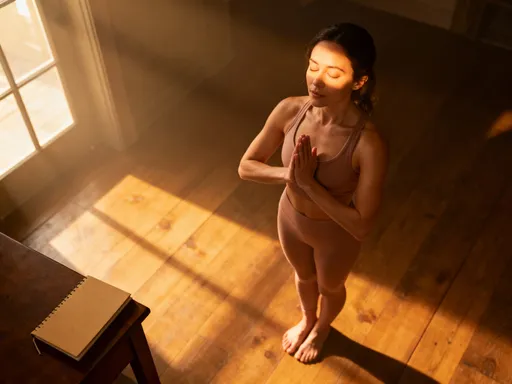
After researching evidence-based practices, I designed a simple morning routine that took less than five minutes. I chose exercises proven to enhance stability and stimulate brain function without requiring special equipment. Each movement lasted just 30 seconds, making it easy to stick with even on the busiest days. The routine began with a single-leg balance: standing barefoot, lifting one foot slightly off the ground, and focusing on a fixed point ahead. I alternated sides, noticing how my core engaged to keep me upright.
Next came the tandem stance—placing one foot directly in front of the other, heel to toe, arms at my sides. This narrow base of support increased the challenge, forcing my body to make constant micro-adjustments. Then, I practiced weight shifts: slowly moving my weight from left to right, front to back, feeling the connection between my feet and the floor. Finally, I repeated one of the earlier stances—but with my eyes closed. Removing visual input intensified the demand on my vestibular and proprioceptive systems, deepening the brain-body connection.
At first, I wobbled constantly. But within days, I could hold each position steadily. More importantly, I began to notice mental shifts. My morning brain fog lifted faster. I felt more present during conversations. Even my posture improved, reducing the low back discomfort I hadn’t realized was linked to poor alignment. The routine wasn’t physically exhausting, but it was mentally engaging. It served as a daily reset, a moment of focused attention that set the tone for the rest of the day. Over time, this small habit became non-negotiable—a quiet investment in my overall resilience.
Why This Works: The Brain-Body Connection
The science behind these changes lies in how balance training activates key regions of the brain. When you challenge your stability, the cerebellum—the “little brain” at the base of your skull—works overtime to coordinate movement and correct imbalances. But recent research shows the cerebellum also communicates with the prefrontal cortex, the area responsible for executive functions like planning, focus, and emotional control. This means that every time you steady yourself on one foot, you’re also giving your brain a subtle cognitive workout.
Neuroimaging studies have found that individuals who regularly engage in balance exercises show increased gray matter density in areas associated with attention and self-regulation. Additionally, the act of focusing on bodily sensations during movement enhances interoception, which is linked to better emotional awareness and reduced reactivity. People with higher interoceptive accuracy tend to manage stress more effectively and report greater emotional resilience. By tuning into how your body feels during balance drills, you’re not just improving coordination—you’re building a stronger feedback loop between physical sensation and mental response.
Movement-based practices like tai chi and yoga have long been associated with improved mental health, and balance training shares many of their mechanisms. Unlike high-intensity workouts that can sometimes increase stress hormones, gentle balance exercises promote parasympathetic activation—the “rest and digest” state. This helps lower cortisol levels, slow heart rate, and create a sense of calm. The combination of physical control and mental focus creates a unique form of mindfulness, one that doesn’t require sitting in silence but instead emerges through intentional movement. For busy individuals, especially those managing household and caregiving responsibilities, this active form of mental reset can be more accessible and sustainable than traditional meditation.
Making It Stick — How to Build a Habit Without Pressure
The biggest obstacle to consistency isn’t lack of time—it’s the belief that wellness requires major effort. The key to making balance training last is to remove the pressure to perform. Instead of treating it as another item on your to-do list, integrate it into moments you’re already doing. For example, stand on one leg while brushing your teeth, waiting for the kettle to boil, or folding laundry. These micro-practices add up, and because they’re woven into existing routines, they feel natural rather than burdensome.
Habit stacking—pairing a new behavior with an established one—has been shown to increase adherence. If you always check your phone in the morning, do a 30-second balance stance first. If you drink tea in the afternoon, stand tall and shift your weight slowly side to side while it steeps. Over time, these small actions become automatic. The goal isn’t to achieve perfect form but to cultivate awareness. Celebrate subtle wins: standing a little steadier, noticing your breath, feeling more grounded during a stressful moment.
Tracking progress doesn’t require a journal or app. Simply pay attention to how you feel. Do you stand taller? Walk with more confidence? React more calmly under pressure? These are signs that the practice is working. For many women in midlife, especially those managing hormonal shifts, caregiving demands, or career transitions, this kind of embodied practice offers a quiet but powerful form of self-care. It’s not about looking a certain way or achieving a fitness milestone—it’s about feeling stable, both physically and emotionally. And because it requires no special equipment or wardrobe, it’s accessible to anyone, anywhere.
Beyond Stability — Long-Term Benefits for Mental Resilience
What began as a simple experiment evolved into a cornerstone of my well-being. After several weeks, I noticed I was less reactive during stressful moments. When my child spilled juice on the floor or a work deadline loomed, I paused before responding—grounded, not frantic. My decision-making improved. I felt more confident in my body, which translated into greater confidence in my choices. This wasn’t due to a dramatic lifestyle overhaul, but to the cumulative effect of daily micro-practices that reinforced stability from the ground up.
Others have reported similar experiences. A teacher shared that balance drills helped her manage classroom stress more effectively. A nurse found that her lower back pain decreased after just two weeks of daily practice. A mother of three said she felt “more like herself” after prioritizing these small moments of presence. These outcomes aren’t accidental. Improved physical balance strengthens neural circuits that support emotional regulation, focus, and self-trust. It sends a quiet message to the nervous system: I am steady. I am safe. I can handle this.
Balance is not about perfection. It’s about practice. Some days you’ll wobble. Some days you’ll feel solid. Both are part of the process. The goal isn’t to eliminate instability but to learn how to respond to it with awareness and grace. In a world that often pulls us in multiple directions, reclaiming a sense of inner steadiness is one of the most powerful acts of self-care. It starts with a single foot, a single breath, a single moment of focus. You don’t need more time, more resources, or a complete transformation. You just need to begin—where you are, as you are. Because true balance isn’t found in stillness. It’s found in the daily choice to stand firm, one small step at a time.