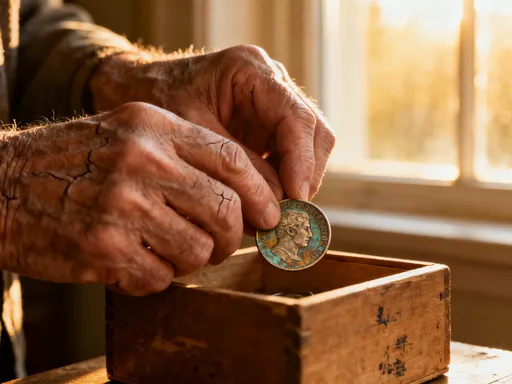
How I Treat My Finances Like Chinese Medicine — Natural Balance, Long-Term Gains
What if managing money felt less like gambling and more like healing? I used to chase quick returns until I burned out — and then I discovered a smarter way. Inspired by Chinese medicine’s focus on balance and prevention, I started viewing my finances as a system, not a scoreboard. Slowly, steadily, things improved. This isn’t about get-rich-quick schemes. It’s about using time-tested principles to build lasting financial health — gently, wisely, and sustainably. Just as the body thrives when its energies are aligned, so too can your money grow stronger when guided by patience, awareness, and natural rhythm. This is not a story of overnight success, but of quiet transformation — one thoughtful choice at a time.
The Wake-Up Call: When My Financial System Broke Down
There was a year when I thought I had it all figured out. Markets were rising, my portfolio was up double digits, and I felt invincible. I traded frequently, moved money between hot sectors, and celebrated every small win like a personal victory. But beneath the surface, something was off. I was anxious, checking my phone before bed and first thing in the morning. A dip of two percent would send me into a spiral of fear and reaction. I made impulsive decisions — selling low, buying high — driven more by emotion than logic. By the end of that year, despite the market’s gains, my returns lagged far behind. Worse, I was exhausted. It wasn’t until I visited a holistic health practitioner for persistent fatigue that I began to see the connection.
The practitioner didn’t just look at my symptoms — she asked about my sleep, diet, stress levels, and daily rhythms. She explained that in traditional Chinese medicine, illness doesn’t appear overnight. It grows from imbalances ignored over time: poor habits, unresolved stress, and lack of harmony between body and environment. That conversation hit me like a mirror. I realized I had been treating my finances the way I had been treating my health — reacting to symptoms instead of addressing root causes. I had ignored the early warning signs: mounting credit card debt, inconsistent savings, and an emergency fund that barely covered a month of expenses. Just as the body gives subtle cues before illness sets in, my financial system had been sending signals — I just hadn’t listened.
That moment became my wake-up call. I stepped back and asked myself: What if I approached money the way Chinese medicine approaches wellness? Not with force, but with awareness. Not with aggression, but with balance. Instead of chasing performance, what if I focused on sustainability? This shift in mindset didn’t fix everything overnight, but it changed everything. It moved me from a reactive, fear-based relationship with money to one rooted in observation, care, and long-term nurturing. And that, more than any single investment decision, became the foundation of my financial healing.
Qi of Cash Flow: Understanding Your Financial Energy
In Chinese medicine, Qi is the vital life force that flows through the body, sustaining all functions. When Qi is strong and moving freely, we feel energized, clear, and resilient. When it’s blocked or depleted, we experience fatigue, confusion, and vulnerability to illness. Translating this concept to personal finance, I began to see my cash flow as my financial Qi — the energy that powers every decision, every opportunity, every safety net. Without healthy cash flow, even the best investment strategies collapse under pressure. Yet, like many people, I had never truly mapped my financial energy. I knew roughly how much I earned and spent, but I didn’t understand where the leaks were — the small, invisible drains that eroded my balance over time.
I started tracking every dollar coming in and going out, not with judgment, but with curiosity. What I discovered surprised me. Subscriptions I no longer used, automatic renewals I had forgotten, and recurring payments for services I could live without — they added up to hundreds of dollars a month. Then there was the high-interest credit card debt I was only making minimum payments on, a constant drain on my financial Qi. Each month, a portion of my energy was being siphoned away before I could even use it. This wasn’t just about spending too much — it was about energy misalignment. Just as poor posture can restrict the flow of Qi in the body, poor financial habits were blocking my ability to grow and protect my resources.
So I began to restore balance. I canceled unused subscriptions, consolidated debt into a lower-interest personal loan, and set up automatic transfers to savings before I had a chance to spend. I also created a simple monthly review — a financial pulse check — where I assessed my income, expenses, and savings rate. This wasn’t about perfection; it was about awareness. Over time, I noticed a shift. My anxiety decreased. My savings grew. I had more flexibility to handle unexpected costs. Most importantly, I felt more in control. Just as regular acupuncture or qigong helps maintain energetic balance in the body, consistent cash flow management became my financial maintenance routine. It wasn’t flashy, but it was foundational. When your financial Qi flows freely, you don’t have to force results — they emerge naturally.
Investing with Yin and Yang: Balancing Risk and Patience
One of the core principles of Chinese medicine is the balance between yin and yang — complementary forces that, when in harmony, create stability and health. Yin represents rest, nourishment, and receptivity; yang represents action, growth, and expansion. I realized I had been living — and investing — in a state of extreme yang: constant action, constant growth, constant movement. There was little room for yin — no space for patience, stability, or quiet compounding. My portfolio was full of speculative stocks, short-term trades, and high-risk bets. I wanted results now, not later. But just as too much yang leads to burnout in the body, too much risk in investing leads to volatility, stress, and long-term underperformance.
I decided to rebalance. I began by defining what yin and yang meant in my financial life. Yang investments would be growth-oriented — low-cost index funds, dividend-paying stocks, and long-term holdings in stable companies. These are the engines of growth, the active ingredients that drive returns over time. Yin investments, on the other hand, would be protective and stabilizing — emergency savings, short-term bonds, and diversified assets that reduce overall risk. These don’t generate high returns, but they provide resilience. Just as a herbal formula might include both a stimulating herb and a calming one, my portfolio needed both growth and stability to function well.
I reallocated my investments to reflect this balance. I moved a significant portion into broad-market index funds, which historically have delivered solid returns with lower volatility than individual stocks. I strengthened my emergency fund to cover six months of living expenses, giving me peace of mind during market downturns. I also began dollar-cost averaging — investing a fixed amount regularly — which removed the emotional pressure of timing the market. This approach felt slower, less exciting, but far more sustainable. Over the next few years, while I didn’t experience the euphoria of a 50% gain in a single stock, I also avoided the devastation of a sudden crash. My portfolio grew steadily, compound interest working quietly in the background. The balance between yin and yang didn’t eliminate risk — nothing can — but it reduced unnecessary exposure and created a rhythm that matched my life, not just the market’s noise.
Prevention Over Cure: Building Resilience Before Crisis Hits
In Chinese medicine, the highest form of care is not treating illness, but preventing it. A skilled practitioner doesn’t wait for symptoms to appear — they monitor the body’s rhythms, strengthen the immune system, and adjust lifestyle habits to maintain harmony. This idea transformed the way I thought about financial security. I had always approached money reactively: when a bill was late, I’d scramble to cover it; when the market dropped, I’d panic and sell. I was constantly putting out fires instead of building a fireproof home. Prevention, I realized, wasn’t about predicting every problem — it was about creating systems that could withstand inevitable shocks.
I started with automation. I set up automatic transfers to savings, retirement accounts, and investment platforms, ensuring that a portion of every paycheck was allocated before I could spend it. This wasn’t just about discipline — it was about removing decision fatigue. Just as daily herbal tonics support long-term vitality, these small, consistent actions built financial resilience over time. I also reviewed my insurance coverage — health, home, life, and disability — not because I expected disaster, but because I valued peace of mind. Insurance isn’t an investment; it’s a safeguard, a financial immune system that kicks in when needed.
Another key habit was the quarterly financial review. Every three months, I would assess my budget, check my credit report, rebalance my portfolio, and update my goals. This wasn’t a deep audit — just a 60-minute check-in to ensure everything was aligned. It allowed me to catch small issues before they became big ones: a rising utility bill, a change in tax withholding, or a shift in market conditions. These regular tune-ups kept my financial system running smoothly. Over time, I noticed something powerful: I stopped fearing emergencies. When my car needed repairs, I had the funds. When a family member needed help, I could contribute without derailing my own plans. Prevention didn’t make me rich — but it made me secure. And security, I learned, is the quiet foundation of lasting wealth.
The Herbal Portfolio: Choosing Tools That Nourish Over Time
Just as a traditional herbalist selects remedies based on their properties, side effects, and compatibility with the patient, I began to evaluate financial tools not by their popularity or promises, but by how well they served my long-term health. I had tried many approaches: robo-advisors that promised hands-off investing, peer-to-peer lending that offered high yields, and dividend stocks that delivered regular income. Some worked well; others drained my energy, time, or peace of mind. I realized that not every financial product is right for every person — just as not every herb is right for every constitution.
I started by defining my criteria: low fees, simplicity, long-term growth potential, and minimal emotional toll. Robo-advisors, for example, were convenient but felt too impersonal. I missed the connection to my money. Peer-to-peer lending offered attractive returns, but the risk was high, and monitoring the loans required constant attention — a form of financial noise I didn’t need. Dividend stocks provided steady income, but required research and monitoring, which I didn’t always have time for. What worked best was a mix of low-cost index funds and ETFs — diversified, transparent, and designed to grow quietly over decades. They weren’t exciting, but they were reliable, like a daily tonic that builds strength over time.
I also paid attention to how each tool made me feel. Did it cause stress? Did it require constant monitoring? Did it align with my values and lifestyle? I let go of products that created anxiety, even if they promised higher returns. Instead, I focused on tools that felt sustainable — ones I could stick with through market ups and downs. This approach wasn’t about maximizing every dollar; it was about creating a portfolio that supported my life, not disrupted it. Like a well-crafted herbal formula, my financial plan became a blend of ingredients that worked together in harmony, each playing a role in long-term nourishment rather than short-term stimulation.
Emotional Jing: Protecting Your Financial Essence
In Chinese medicine, Jing is considered the deepest reserve of vitality — the essence that supports longevity, strength, and resilience. Unlike Qi, which can be replenished daily, Jing is finite and must be protected. I came to see my emotional stamina as my financial Jing. Every time I made a fear-based decision, checked my portfolio obsessively, or reacted to market headlines, I was depleting this essential resource. I had treated my emotions as irrelevant to investing, but they were the very foundation of my choices. Greed led me to take on too much risk; fear caused me to sell at the worst times. I was burning through my Jing, and it was costing me both financially and personally.
To protect it, I built boundaries. I limited my financial news intake to once a week, avoiding the constant barrage of alarmist headlines. I set decision rules — for example, I wouldn’t make any investment changes during market swings of less than 10%. I created a “calm zone” for financial decisions: a quiet time, free from distractions, where I could reflect before acting. I also practiced mindfulness, learning to observe my emotions without reacting to them. When anxiety arose, I acknowledged it, but didn’t let it dictate my moves. Over time, I became less reactive, more grounded.
This emotional resilience became my greatest financial asset. I stayed invested during downturns, knowing they were temporary. I avoided chasing trends, focusing instead on my long-term plan. I made decisions based on clarity, not panic. Protecting my Jing didn’t guarantee higher returns, but it prevented costly mistakes. It allowed me to stay the course, even when the market was noisy. And that consistency — that ability to remain centered — became the quiet engine of my financial growth.
The Long Road to Wealth: Sustainability Beats Speed
One of the most powerful lessons I learned from Chinese medicine is that healing is not fast. A chronic imbalance isn’t fixed in a day — it requires consistent, gentle care over time. A slow-cooked herbal soup extracts more nourishment than a quick boil. This changed my definition of success. I stopped measuring my progress by monthly statements or quarterly returns. Instead, I began to look at annual progress — not just in dollars, but in habits, confidence, and peace of mind. I celebrated small wins: a fully funded emergency account, a debt-free credit card, a year of consistent investing.
My portfolio grew slowly, but steadily. There were years with modest returns, and that was okay. I wasn’t in a race. I was building a system that could last a lifetime. Compound interest, I realized, wasn’t magic — it was patience made visible. The earlier you start, the more time your money has to grow, but even starting later, consistency matters more than timing. I focused on what I could control: my savings rate, my expenses, my emotional responses. I accepted that markets would fluctuate, but my habits would remain steady.
Today, my finances aren’t perfect. There are still unexpected expenses, market dips, and moments of doubt. But the system holds. I no longer fear money — I understand it, respect it, and care for it. I’ve learned that true wealth isn’t about having the most — it’s about living in balance, with enough, and with peace. The journey isn’t about reaching a finish line; it’s about walking the path with awareness, one balanced choice at a time.
Conclusion: Healing Money, One Balanced Choice at a Time
True financial wellness isn’t about peak performance — it’s about enduring harmony. By treating money like health, I stopped fighting symptoms and started nurturing causes. The tools aren’t magic; they’re mindful. And just like in Chinese medicine, the journey isn’t about perfection — it’s about returning to balance, again and again. When you align your financial habits with your values, energy, and long-term vision, wealth becomes not a destination, but a way of living. It grows quietly, steadily, like roots beneath the soil. You may not see it every day, but it’s there — strong, deep, and sustainable. Start where you are. Pay attention. Make one small, balanced choice. Then another. Over time, they add up to a life of financial clarity, resilience, and peace.